
Urban agriculture encompasses a wide range of areas including urban farming and food production, nursery and greenhouse production, sustainable turfgrass and landscape management, and urban forestry. Urban agriculture provides fresh, local food to communities and numerous environmental and social benefits as well as beautification.
Welcome to the UGA Center for Urban Agriculture
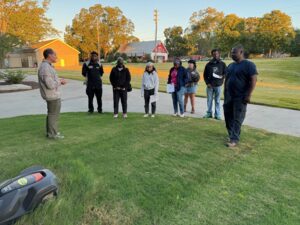
At the UGA Center for Urban Agriculture, we bridge the gap between city living and sustainable agriculture. Through research-based education and resources, we empower Georgians to cultivate thriving urban spaces—from backyard gardens to commercial landscapes, community farms to city forests. Whether you’re growing food, managing pests, developing green spaces, or seeking sustainable solutions, our expertise spans the full spectrum of urban agricultural challenges. Join us in building greener, more resilient communities through innovative growing practices, environmental stewardship, and smart resource management.

Benefits and Importance
Urban agriculture offers multiple benefits, including:
- Improved food security
- Enhanced nutrition
- Increased physical activity
- Community building
- Environmental stewardship and conservation
Urban agriculture addresses challenges within urban communities including noise abatement, soil erosion and runoff, and preservation of wildlife habitats. It can also provide economic opportunities through production and distribution.
Resources
Access comprehensive research and publications highlighting the environmental, social, and economic benefits of urban agriculture and landscape management.
Urban Agriculture
2024
United States Department of Agriculture, USDA
University of Minnesota Extension, University of Minnesota Extension
Danler, S. , and Langellotto, G., Oregon State University
Papanek, A., Campbell, C.G., and Eason, H., University of Florida Extension